Learning Python with Keras Library: Unlock the Power of Deep Learning
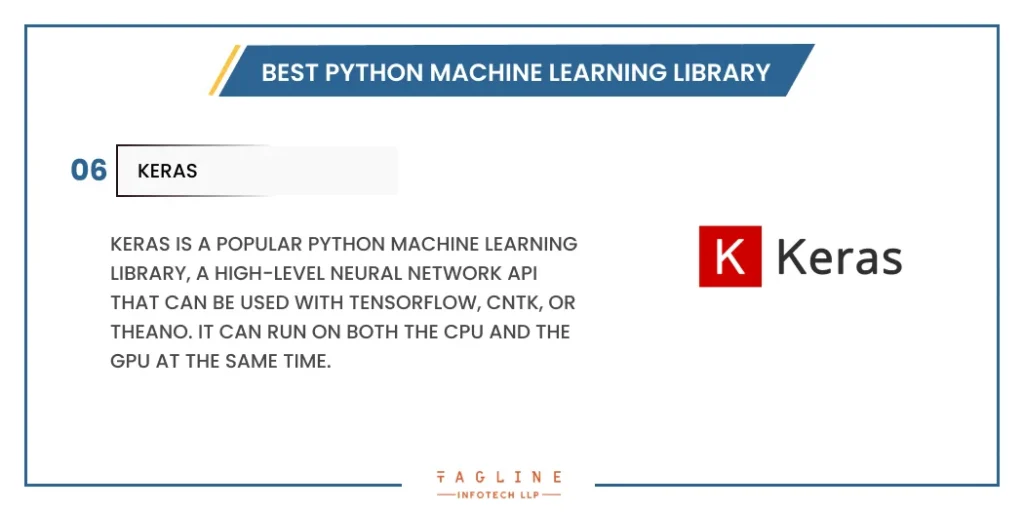
Keras is a powerful deep learning API written in Python that enables developers to build and train neural networks with ease. With Keras, you can quickly prototype and deploy deep learning models, making it an ideal choice for both beginners and experts in the field of machine learning. In this article, we will explore the world of Keras and how to learn Python with this powerful library.
What is Keras?
Keras is an open-source deep learning library written in Python that provides a high-level interface for building and training neural networks. It was developed by François Chollet, a Google AI researcher, and is built on top of TensorFlow, making it highly flexible and accessible. Keras is designed to simplify the creation and training of neural networks, making it an ideal choice for developers who want to focus on the task at hand rather than spending time on low-level implementation details.
Key Features of Keras
- Easy to Use: Keras has a simple and user-friendly interface, making it easy to learn and use, even for developers with limited experience in deep learning.
- Highly Flexible: Keras supports multiple backends, including TensorFlow, Theano, and CNTK, making it easy to switch between different backends and frameworks.
- Progressive Disclosure of Complexity: Keras adopts the principle of progressive disclosure of complexity, allowing developers to start with simple workflows and gradually move to more complex ones as needed.
- Extensive Documentation: Keras has an extensive documentation and community support, making it easy to find resources and get help when needed.
Learning Python with Keras Library
To learn Python with Keras, you will need to have a basic understanding of Python programming and some knowledge of machine learning concepts. Here are some steps to get you started:
- Install Keras: First, you need to install Keras on your system. You can install it using pip, the Python package manager.
- Get Familiar with Keras API: Next, you need to get familiar with the Keras API. Keras has a simple and intuitive API, making it easy to learn and use.
- Build and Train a Model: Once you are familiar with the Keras API, you can start building and training a model. Keras provides a range of pre-built models and tutorials to get you started.
- Experiment and Refine: After building and training a model, you can experiment with different hyperparameters and refine your model to achieve better results.
Best Practices for Learning Python with Keras
Here are some best practices to keep in mind when learning Python with Keras:
- Start with Simple Workflows: Keras adopts the principle of progressive disclosure of complexity, allowing developers to start with simple workflows and gradually move to more complex ones as needed.
- Use Pre-Built Models and Tutorials: Keras provides a range of pre-built models and tutorials to get you started. Use these resources to learn and build your skills.
- Experiment and Refine: Experiment with different hyperparameters and refine your model to achieve better results.
- Join the Keras Community: Join the Keras community to get help and support from other developers and experts in the field.
Conclusion
Keras is a powerful deep learning API written in Python that enables developers to build and train neural networks with ease. With its simple and user-friendly interface, extensive documentation, and community support, Keras is an ideal choice for both beginners and experts in the field of machine learning. By following the steps outlined in this article, you can learn Python with Keras and unlock the power of deep learning.
Further Reading
For further reading, check out the official Keras documentation and tutorials. You can also join the Keras community to get help and support from other developers and experts in the field.