Setting Screen Time Limits for 13-Year-Olds: A Guide for Parents
As a parent of a 13-year-old, you're likely aware of the potential risks associated with excessive screen time. In today's digital age, it's more crucial than ever to establish healthy screen time limits for your child. The good news is that there are guidelines and strategies to help you achieve this goal.
Why Establish Screen Time Limits?
The American Academy of Pediatrics (AAP) recommends setting screen time limits for children due to the potential risks associated with excessive screen time, including:
- Physical inactivity and obesity
-
Recommended Screen Time Limits for 13-Year-Olds
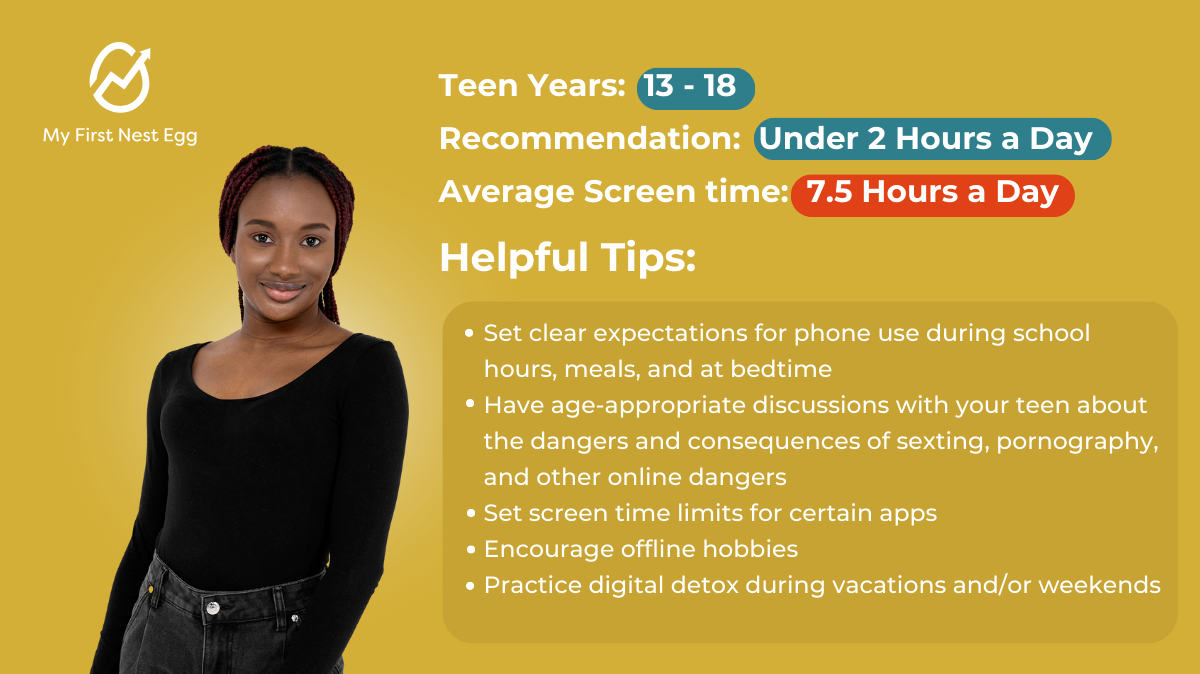
The recommended screen time limits for 13-year-olds vary depending on the organization. The AAP suggests:
- 2 hours or less per day of recreational screen time, including TV, computers, smartphones, and other digital devices
- At least 60 minutes of moderate to vigorous physical activity per day
- 10 hours of sleep per night for school-age children
- Limit screen time before bed and encourage physical activity or other relaxing activities before bedtime
It's essential to note that these are general guidelines, and the right screen time limit for your child may vary based on their individual needs and circumstances.
Health Consequences of Excessive Screen Time
Research has shown that excessive screen time can lead to various health consequences, including:

- Increased risk of obesity and related health problems
- Decreased sleep quality and duration
- Increased risk of depression, anxiety, and other mental health problems
- Decreased attention span and increased risk of attention deficit hyperactivity disorder (ADHD)
Strategies for Setting Healthy Screen Time Limits
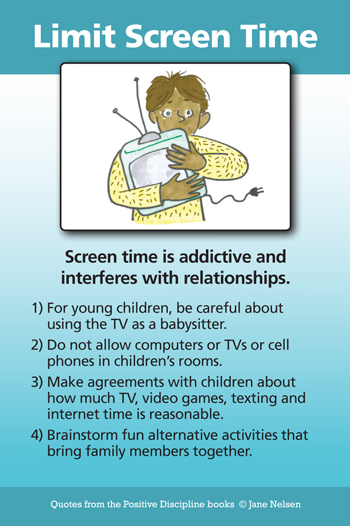
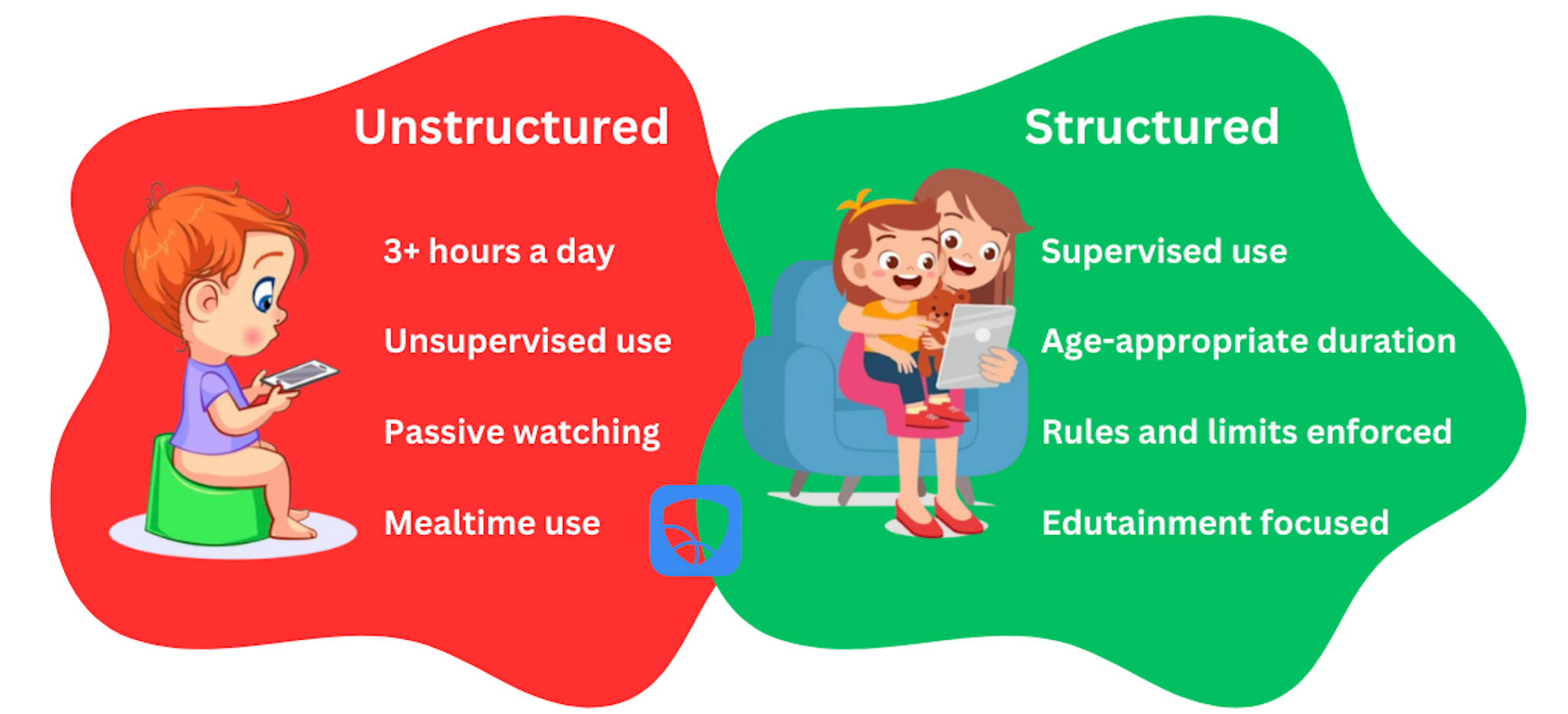
Establishing screen time limits can be challenging, but there are strategies to help you achieve this goal:
- Use parental control software or apps to monitor and limit screen time
- Set screen-free zones and times, such as the dinner table and bedrooms
- Encourage physical activity and other relaxation techniques before bedtime
- Model healthy screen use habits yourself, as children often mimic adult behavior
- Have open and honest conversations with your child about the risks of excessive screen time and the importance of setting limits
Conclusion
Setting screen time limits for 13-year-olds requires a thoughtful and multi-faceted approach. By establishing these limits and promoting healthy screen use habits, you can help your child avoid the potential risks associated with excessive screen time and develop a positive relationship with technology.
Additional Resources
For more information on setting screen time limits and promoting healthy screen use habits, consider the following resources:
- The American Academy of Pediatrics (AAP) guidelines for screen time
- The Centers for Disease Control and Prevention (CDC) recommendations for screen time and physical activity
- Parental control software and apps, such as Freedom or Moment
- Books and online resources on healthy screen use habits and digital citizenship